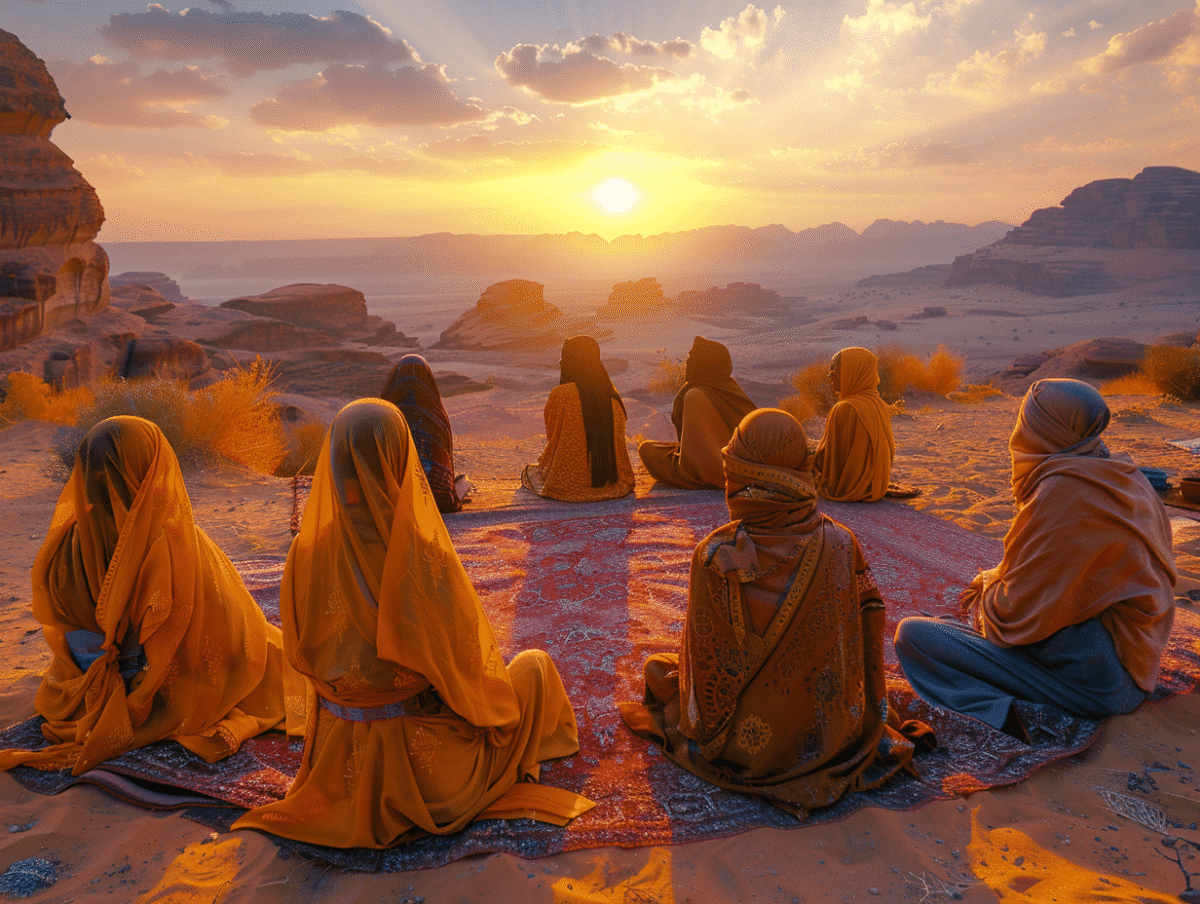
For centuries, nomadic communities have traversed the expanses of our planet, carrying with them a cultural and spiritual heritage that is as rich as it is varied. These peoples, constantly on the move, adapt their beliefs and practices to an ever-changing environment, weaving a unique bond with nature and the divine. The spiritual practices of nomads, often overlooked, reflect an approach to life deeply rooted in flexibility and resilience. They offer a fascinating insight into how humans can perceive and celebrate the sacred outside the rigid structures of sedentary societies.
The spiritual practices of nomadic communities: an overlooked cultural heritage
Within these wandering communities, the diversity of beliefs manifests in forms of spiritual expression that often escape the public eye. Far from the fantasized exoticism, these practices embody an essential aspect of human spirituality, flourishing outside the established structures of religion. Meditation, prayer, yoga—practices that, while common in sedentary religions, take on a dimension adapted to the nomadic lifestyle.
Spirituality, in its essence, can exist without the formal structure of religion. It reveals itself through individual or collective quests for meaning, marked by diverse spiritual experiences. Meditation is not merely a technique for awakening consciousness but a means of harmonizing the perpetual movement of life with the quest for inner peace. Prayer, on the other hand, becomes an intimate and itinerant dialogue with a higher power, reflecting a deep connection with the surrounding universe.
At the heart of these traditions, Gypsy religion stands out for its syncretism and its ability to integrate elements from different origins. This capacity for absorption and reinterpretation of surrounding beliefs testifies to the richness of nomadic culture, while raising the question of preserving this cultural heritage in the face of the homogenization of global religious practices.
In light of this complexity, voices are rising to emphasize the urgency of documenting and understanding these practices before they disappear under the onslaught of modernity. The spiritual diversity of nomads, with its myriad of individual testimonies, constitutes a segment of religious history that is too often ignored. Recognizing and valuing this diversity not only enriches our perception of spirituality but also contributes to a broader intercultural dialogue, essential in our time.
How do nomadic beliefs shape interaction with the environment and modern society?
Nomadic beliefs are rooted in a unique relationship with their environment, often dictated by a profound self-awareness and respect for nature. This interconnectedness, which translates into a particular attention to conservation and sustainable use of resources, influences how these communities engage with the ecosystem. The connection with others is also strengthened through practices of sharing and solidarity, essential for survival in itinerant living conditions.
In the context of modern society, the adaptation of these beliefs appears as a key element in the quest for mental and emotional well-being. The values espoused by nomads, such as simplicity, freedom, and mutual aid, present themselves as appealing alternatives to individualism and rampant consumption. The social engagement of these communities manifests through initiatives such as informal education and knowledge exchange, contributing to mutual enrichment between nomadic and sedentary cultures.
The interfaith dialogue and the promotion of spiritual diversity by organizations such as ‘Spiritual Diversity’ illustrate the ability of nomads to integrate into the mosaic of society while preserving their traditions. Figures like Frédéric Lenoir highlight the relevance of these exchanges for a better understanding of religious phenomena in our contemporary world. These interactions encourage a balance between tradition and modernity, offering a path towards a more inclusive society that respects the plurality of spiritual journeys.