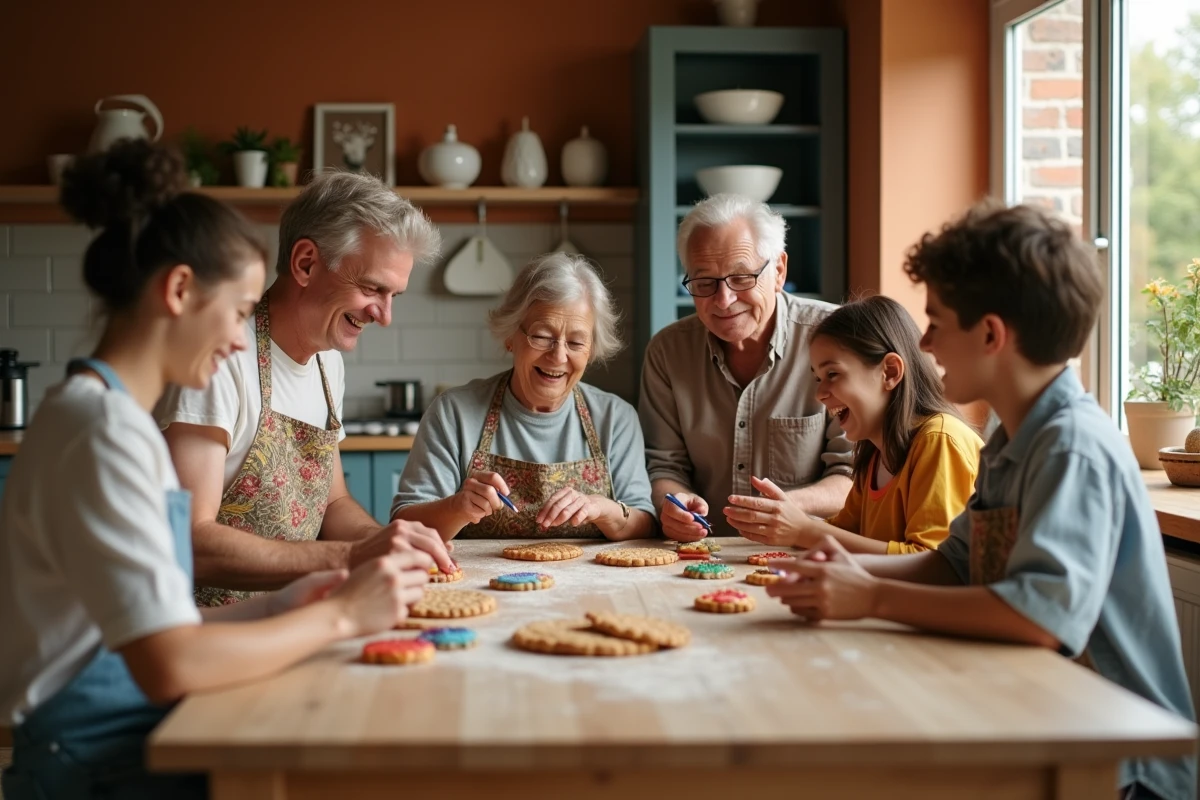
French families are increasingly directing their budget towards shared experiences rather than material purchases for their children. The “Families and Leisure” barometer from Protourisme, published in September 2024, confirms this shift towards micro-experiences: creative workshops, immersive outings, multi-generational visits.
This shift changes the way family memories are built and raises a concrete question: which activities truly create memorable moments, beyond the generic lists found everywhere?
Intergenerational Activities: A Format That Changes Family Dynamics
Since 2023, French amusement parks and museums have been developing “3 generations” labeled pathways designed for grandparents, parents, and children to participate together, according to the UNAT study “Proximity and Intergenerational Tourism.” This is not a marketing detail. Including grandparents transforms the very nature of the activity: the pace slows down, exchanges multiply, and children step out of the vertical parent-child relationship.
Specifically, this means prioritizing activities where everyone brings something different. A pottery workshop in a local cultural center works well because dexterity has nothing to do with age. A storytelling hike, where a guide narrates the history of the landscape, gives grandparents a natural complementary role. Families that have tested these formats on the Buzzorama family site find suitable options for this multigenerational logic.
The trap to avoid: choosing a physically demanding activity thinking it will please everyone. A family via ferrata may excite teenagers and exclude grandparents. The relevant selection criterion is the level of cognitive involvement, not physical.

Digital Tools for Families: Between Creative Support and Screen Trap
The 2024 report “Families and Digital Usage” from UNAF notes a marked increase in downloads of family collaborative apps on French stores in 2023-2024. Geolocated treasure hunts, shared memory notebooks, family podcast creation platforms: the offering has become structured.
These tools work when they serve as triggers, not substitutes. A geolocated treasure hunt app pushes the whole family outside, into a park or neighborhood, with a common goal. The digital aspect fades in favor of physical exploration. Conversely, an online memory notebook risks turning into a photo sorting chore if no one spontaneously engages with it.
Three Digital Formats That Produce Real Memories
- The family podcast: each member records a few-minute episode about a memory, anecdote, or recipe. The result forms an audio archive that children will listen to years later, and the production itself becomes a moment of sharing.
- The geolocated treasure hunt in one’s own city: several apps allow for creating a personalized route with puzzles related to real places. Children run, parents think, grandparents provide historical clues.
- The collaborative travel journal: each evening, a different member writes or draws about the day on a shared tablet. The short and rotating format prevents fatigue.
Field feedback diverges on one point: some families find that these tools strengthen the bond, while others feel they add an extra mental load for the organizing parent. The difference often hinges on a simple parameter: was the tool chosen collectively or imposed?
Local Micro-Experiences: Why Proximity Produces More Lasting Memories
The trend documented by Protourisme goes beyond budget. Families that invest in micro-experiences close to home find it easier to repeat them, creating rituals. A monthly cooking workshop at the covered market, a seasonal nature outing in the nearby forest, a craftsman visit every two months: regularity builds a stronger family memory than an isolated exceptional trip.
Several cities and intercommunalities now offer family passes for their cultural and sports facilities. These schemes lower the financial barrier, but their existence remains little known. Checking with the local town hall or tourist office can reveal unexpected options.
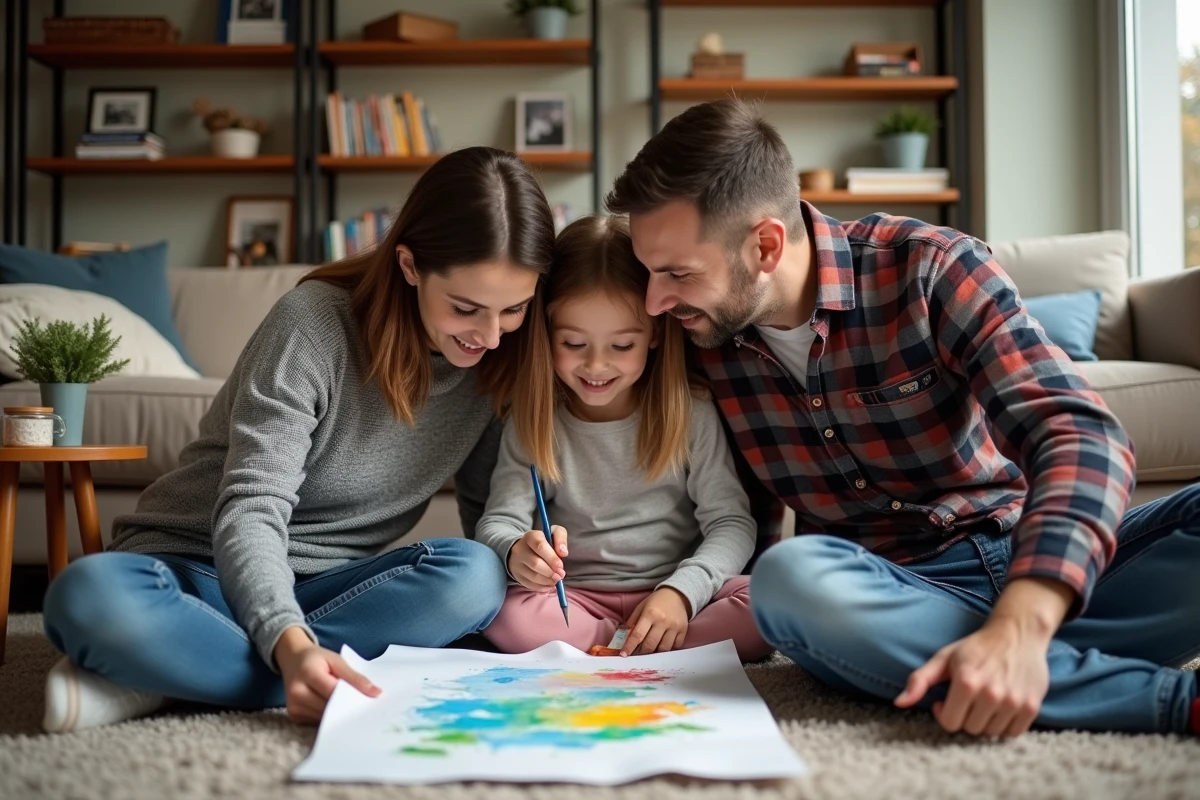
Creative Workshops: The Return of Doing Together
Workshops where something is made (soap, bread, pottery, herbarium) share a common point: they produce an object that the family takes home. This physical object becomes a memory anchor. Children who see a bowl made together on the kitchen shelf reactivate the memory at every meal.
The most expensive activity is almost never the one that leaves the strongest memory. Research cited by Protourisme confirms that the durability of the memory depends more on the active involvement of each participant than on the spectacular nature of the experience.
Games and Activities in Families: What Repetition Brings Beyond Novelty
Lists of “30 family activity ideas” assume that variety is key. Available data suggests a nuance. Families that ritualize an activity (Sunday night board games, Saturday morning walks, Wednesday cooking challenges) build cumulative memories that ultimately define their family identity.
This does not mean giving up on discovery. However, alternating a stable ritual with occasional novelty seems to produce the best balance. The ritual reassures younger children, while novelty stimulates teenagers.
- Weekly ritual: a board game chosen in turn, a cooking recipe from a different country each month, a nature outing fixed for the weekend.
- Quarterly novelty: a new workshop (screen printing, beekeeping, astronomy), an immersive visit to a museum, a home escape game.
- Annual event: a full day dedicated to an activity chosen by the children, without time constraints or imposed schedule.
The Protourisme 2024 barometer notes that families reporting the highest satisfaction levels are those that combine regularity and surprise. Memory is built over time, not in the exception. Scheduling a regular family activity, even modest, has a more significant long-term effect than an isolated exceptional outing.