
The femoro-patellar syndrome, often encountered in athletes, refers to pain around or behind the kneecap, usually exacerbated by activities such as running, jumping, or climbing stairs. This condition, which can result from overload or muscular imbalance, raises questions about the various factors that can influence the recovery period. Recovery is a complex process influenced by the patient’s physiology, the rehabilitation methods adopted, the rest given to the joint, as well as nutritional and psychological input. Understanding these elements is fundamental to optimizing the return to physical activity.
Understanding femoro-patellar syndrome: risk factors and healing process
The femoro-patellar syndrome (FPS) embodies a common pathology, particularly among athletes and sedentary individuals. It manifests as knee pain, caused by abnormal friction between the kneecap and the femur. The causes are multiple, including anatomical anomalies, leg alignment defects, muscle dysfunctions, or patellar hypermobility. A history of surgery or knee injuries and trauma can also predispose individuals to this syndrome, as can the type of sport practiced.
The duration of recovery from femoro-patellar syndrome varies greatly depending on the therapeutic intervention and the management of risk factors. An untreated FPS can lead to cartilage degradation, worsening the prognosis and prolonging recovery. Therefore, identifying the factors that increase the risk of FPS is essential for developing an appropriate treatment plan and preventing recurrences.
A precise diagnosis of the pathology is the responsibility of healthcare professionals. After confirming the presence of FPS, a range of treatments can be considered, from conservative approaches like the use of patellar braces or taping, to more invasive interventions such as arthroplasty in cases of structural knee anomalies. Rehabilitation, often orchestrated by a physiotherapist, plays a crucial role in restoring joint function and reducing symptoms.
Rehabilitation and prevention strategies for effective recovery from femoro-patellar syndrome
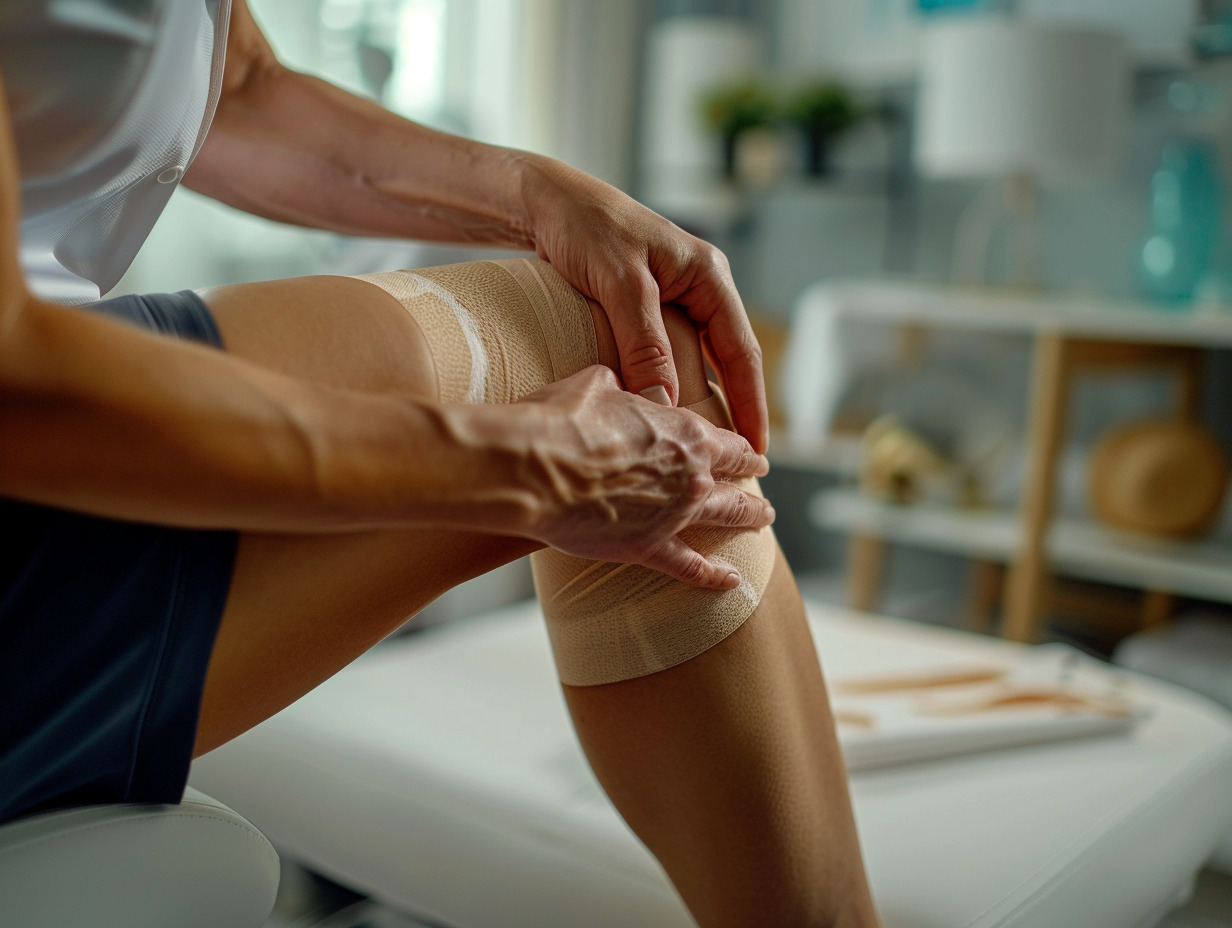
The rehabilitation of femoro-patellar syndrome is a fundamental step in the healing process. It should be personalized and may include the use of a patellar brace or a taping to stabilize the kneecap and reduce friction. Therapeutic exercises, supervised by a physiotherapist, aim to strengthen the muscles supporting the knee, correct muscular imbalances, and improve leg alignment. Orthotic insoles or a foot orthosis may be recommended to modify walking mechanics and relieve tension on the knee.
In terms of prevention, a modification of sports practice may be necessary. Low-impact activities such as swimming, cycling, walking, fitness, aqua aerobics, yoga, or tai chi are preferred. In contrast, running, sports played on hard surfaces, dancing, weightlifting, mountain hiking, leg press, step, rowing, and combat sports should be avoided to limit excessive pressure on the knee joint.
The use of complementary treatments can aid recovery. NSAIDs for their anti-inflammatory effect, therapeutic massages to relax surrounding muscles, or even arthroplasty for cases of severe structural anomalies, complement the therapeutic arsenal. Note that these methods should always be considered after a precise medical diagnosis and under the supervision of qualified healthcare professionals.