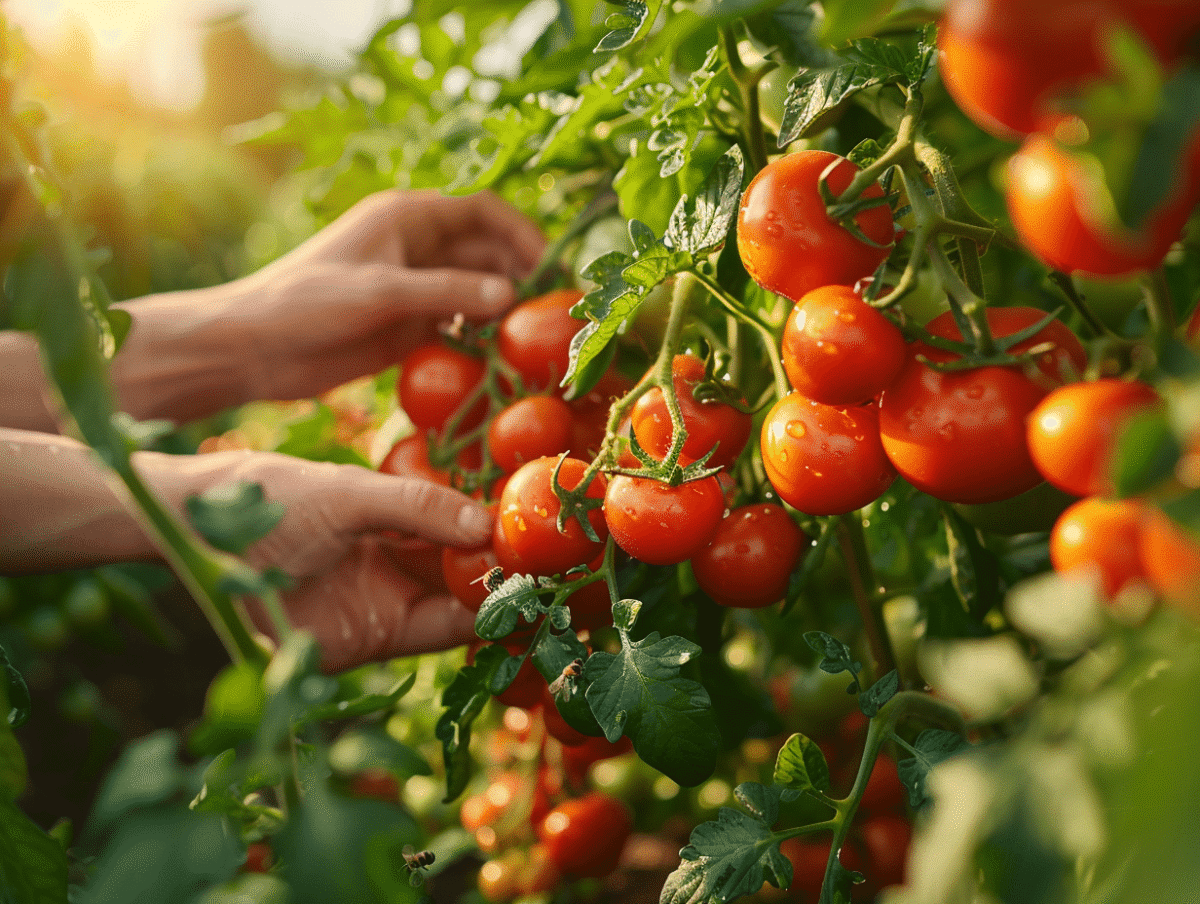
In the art of gardening, growing tomatoes is often considered a cornerstone, showcasing the skill and commitment of the gardener. These red and juicy fruits, symbols of summer, hold secrets for a bountiful harvest. Mastering the tricks for a productive vegetable garden goes beyond simple planting gestures; it is a quest for knowledge, experience, and adaptation to the whims of nature. The success of tomato cultivation reflects the balance between soil science, precise planting schedules, and the finesse of daily care.
Optimizing Tomato Cultivation: Techniques and Tips
Choosing the Variety: The key to success, the choice of tomato varieties adapts to the intended culinary use and the climatic conditions of the garden. From the meaty ‘Beefsteak’ to the tangy ‘Green Zebra’, through the sweet ‘Black Crimea’ and the ‘Roma’ ideal for sauces, the varieties determine the harvest schedule and care specifics. Consider diversity as an asset: planting different varieties not only allows for a range of flavors but also reduces risks against diseases and pests.
Growing Conditions: The tomato, a demanding vegetable plant, requires sunny and airy exposure, as well as rich and well-drained soil. The spacing for planting tomato plants is essential: Leave enough space between the plants for optimal air circulation, which minimizes the occurrence of diseases. Positive associations with plants such as basil or marigold promote a balanced ecosystem and natural pest prevention. Avoid negative associations, such as other solanaceae or fennel, which can inhibit growth or attract specific diseases.
Growing Techniques: Watering tomatoes should be regular, avoiding the foliage to prevent fungal diseases. Mulching retains moisture and limits weeding. For indeterminate varieties, remove suckers to concentrate the plant’s energy on fruit production. An organic fertilizer rich in potash will contribute to the vigor and flavor of the tomatoes. Planting, after the frost dates and applying these tips, paves the way for a generous harvest, about four to five months after sowing.
The Secrets to a Bountiful and Healthy Tomato Harvest
Disease Prevention: The tomato, while generous, remains susceptible to various diseases such as blight, botrytis, powdery mildew, and blossom end rot. One of the most effective strategies is prevention. Adopt crop rotation to limit the accumulation of pathogens in the soil and encourage watering at the base to avoid excessive moisture on the foliage. Monitoring is also crucial: Remove lower leaves and regularly inspect your plants to catch early signs of disease and intervene quickly.
Pest Control: Tomatoes attract their share of pests, including nematodes, spider mites, and aphids. Introducing natural predators, such as ladybugs for aphids, is an eco-friendly control method. Using insect nets or traps can also reduce pest incidence. Plant extracts, such as nettle or marigold, prove to be effective natural repellents while being environmentally friendly.
Tips for Optimal Harvest: To reach the full potential of your garden, follow these tips. Mulching, beyond retaining moisture, maintains stable soil temperature and limits weed development. Regarding fertilization, an organic fertilizer rich in potash will not only promote tomato development but also enhance their taste and disease resistance. Harvesting should be done carefully, picking fruits at maturity to avoid weakening the plant and allowing for continuous production.