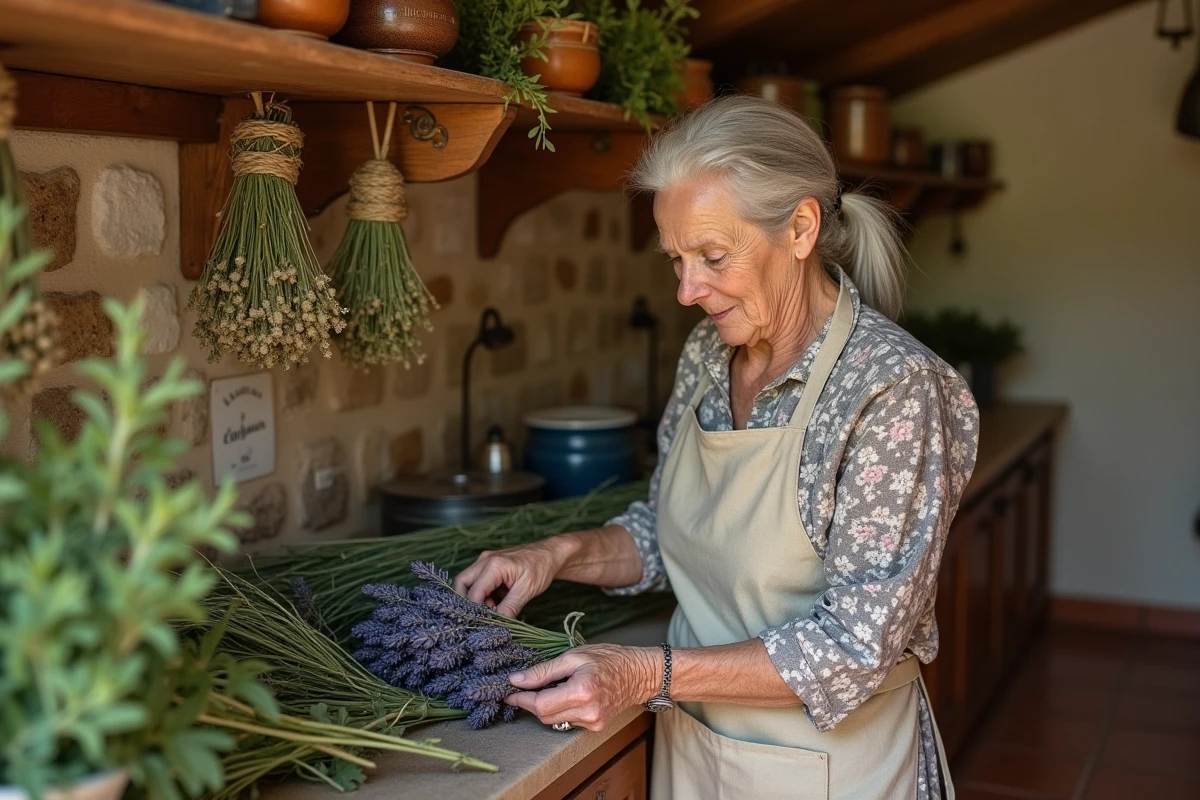
Have you ever crushed a mint leaf between your fingers and felt that immediate freshness? This mundane gesture exactly replicates what French peasants did centuries ago to relieve a headache or calm nausea. French medicinal plants are not an outdated folklore. They form a living heritage, rooted in specific regions, and their traditional uses still illuminate current phytotherapy.
Ethnobotany in France: Local Knowledge in Danger of Disappearing
Before discussing benefits, it is essential to understand a concrete problem. Knowledge about French medicinal plants was passed down orally, from generation to generation, often by women in rural areas. These knowledges have almost never been recorded in writing.
Since 2022, several Regional Natural Parks, such as those in Vercors and Causses du Quercy, have launched participatory programs to document local medicinal plants. The principle: to collect from elderly residents the vernacular names, preparation methods, and popular uses of each plant. These interviews constitute oral archives of intangible heritage, aimed at preserving knowledge that disappears with each generation.
This work by ethnobotanists reveals an unsuspected richness. Each valley, each plateau has its own names and recipes. The same plant can have different names just a few dozen kilometers apart, and preparations vary according to soil and altitude. To deepen this link between regions and plant traditions, a resource to consult is: https://www.cultivonsnosracines.fr/, which precisely documents these regional heritages.
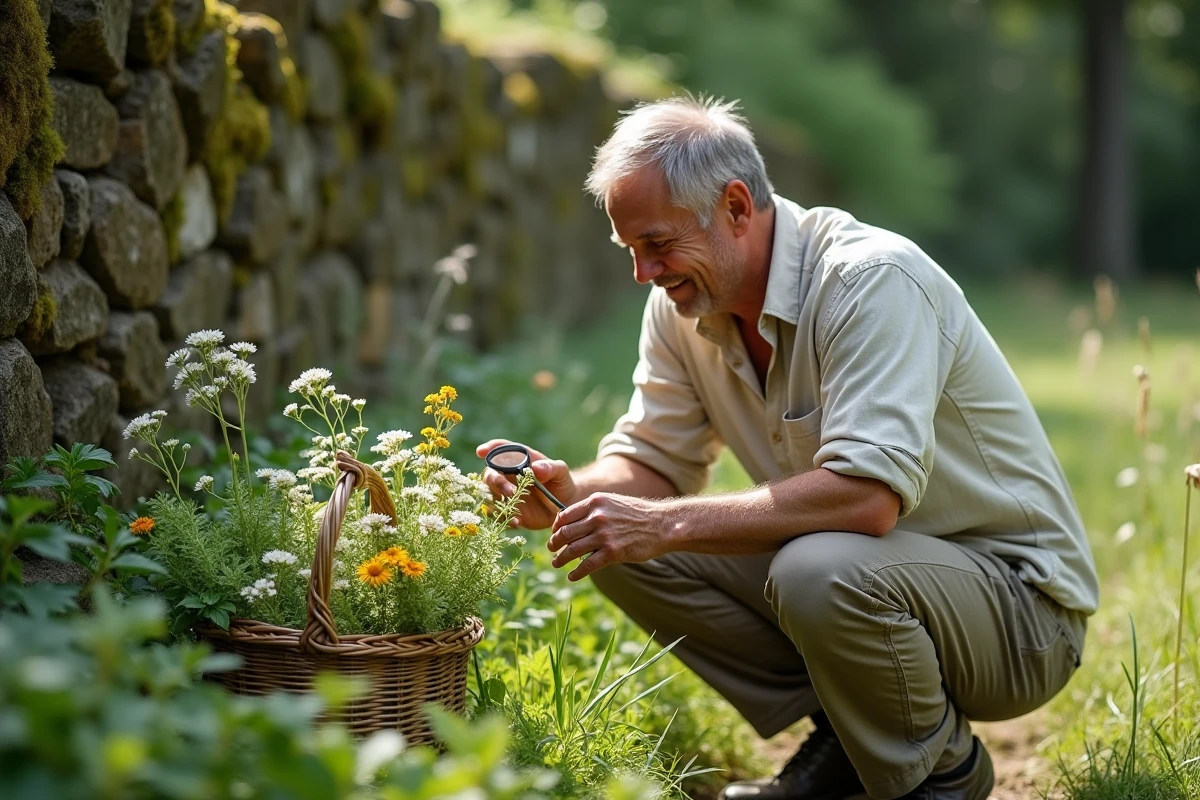
Meadowsweet and Yarrow: Two French Plants to Know
Rather than skim over dozens of species, let’s focus on two emblematic plants from the French countryside whose ancestral uses have a clear pharmacological explanation.
Meadowsweet, the Plant Ancestor of Aspirin
Meadowsweet grew in the wet meadows and ditches of almost all French regions. The ancients used it in infusions for joint pain and febrile states. This was not by chance: meadowsweet is rich in salicylic derivatives, molecules chemically similar to acetylsalicylic acid, the active ingredient in aspirin.
The ANSM maintains this plant on the list of species allowed for over-the-counter sale outside the pharmaceutical monopoly. However, recommendations have tightened in recent years regarding the risks of self-medication. A person on anticoagulants, for example, should never consume meadowsweet without medical advice, precisely because of these salicylic derivatives.
Yarrow, the Plant for Wounds
Yarrow is a perennial plant found along roadsides and in dry meadows in France. Its Latin name, Achillea millefolium, refers to Achilles, who is said to have healed his soldiers with this plant. In the French countryside, yarrow was traditionally used to stop bleeding and soothe digestive troubles.
Today, herbalists recognize its anti-inflammatory and antispasmodic properties. Its finely cut leaves are prepared as an infusion or poultice, just as rural healers did two centuries ago.
New Uses of Ancestral Plants: Beyond Herbal Tea
Do you imagine traditional phytotherapy limited to evening herbal tea? The work of French ethnobotanists published after 2020 shows a different trend. Younger generations are reclaiming “simple” (the historical term for medicinal plants) in forms their grandparents would not have recognized.
Hybrid formats are multiplying:
- Oil macerates, made from local plants like St. John’s wort or lavender, serve as a base for homemade cosmetics for skin care
- Plant syrups (elderberry, thyme, sage) are being repurposed for mixology, especially for non-alcoholic cocktails
- Aromatic cooking salts, enriched with rosemary, savory, or wild oregano, reintroduce medicinal plants into daily food without going through the “remedy” stage
This shift from medicinal to wellness and gastronomy is not insignificant. It makes ancestral knowledge accessible to an audience that would never have entered an herbal shop. Cooking and cosmetics are becoming gateways to traditional phytotherapy.

French Regulation of Medicinal Plants: What Has Changed Recently
Picking a plant in a field and selling it at a market is not trivial from a legal standpoint. In France, the sale of medicinal plants listed in the Pharmacopoeia is generally reserved for pharmacists. Some species have been released from this monopoly by successive decrees from the ANSM, but the list is regularly evolving.
For consumers, the practical consequence is direct:
- Plants purchased from an herbalist or organic store fall under the realm of wellness, not medical care
- Therapeutic claims are prohibited on the packaging of over-the-counter plants
- Natural does not mean harmless: interactions with medications are documented for many common species
Meadowsweet illustrates this point well: allowed for over-the-counter sale, it poses a real risk for people on anticoagulant treatment. A healthcare professional trained in phytotherapy remains the best contact before any regular use.
The ancestral French traditions surrounding medicinal plants are neither a myth nor a mere folkloric heritage. They are based on empirical observations accumulated over centuries, some of which are now finding scientific validation. The collection work carried out in Regional Natural Parks shows that this knowledge remains fragile and deserves to be documented before it fades away with those who carry it.