Cat urine on a book presents a problem that traditional household guides do not address: a paper page cannot be washed like fabric or tile. Effective methods on textiles (saturation with enzymatic cleaner, thorough rinsing) risk warping the pages, creating permanent stains, or promoting mold growth. The question then becomes: what deodorization techniques actually work without degrading the paper support?
Paper vs. textile: why traditional methods fail on a book
Most of the advice available online concerns carpets, cushions, or clothing. They rely on a simple principle: saturate the area, let a product work, then rinse or absorb. On paper, this pattern can cause damage that is sometimes worse than the odor itself.
| Method | Effectiveness on textile | Risk on paper |
|---|---|---|
| Enzymatic cleaner spray | High (breaks down uric acid) | Page deformation, stains, mold |
| Diluted white vinegar | Fair (neutralizes ammonia) | Weakening of fibers, acid stains |
| Baking soda in direct contact | Good absorption | Residues embedded between pages |
| Baking soda or activated charcoal without contact | Not applicable (too slow for soaked textile) | Suitable: gradual absorption without moisture |
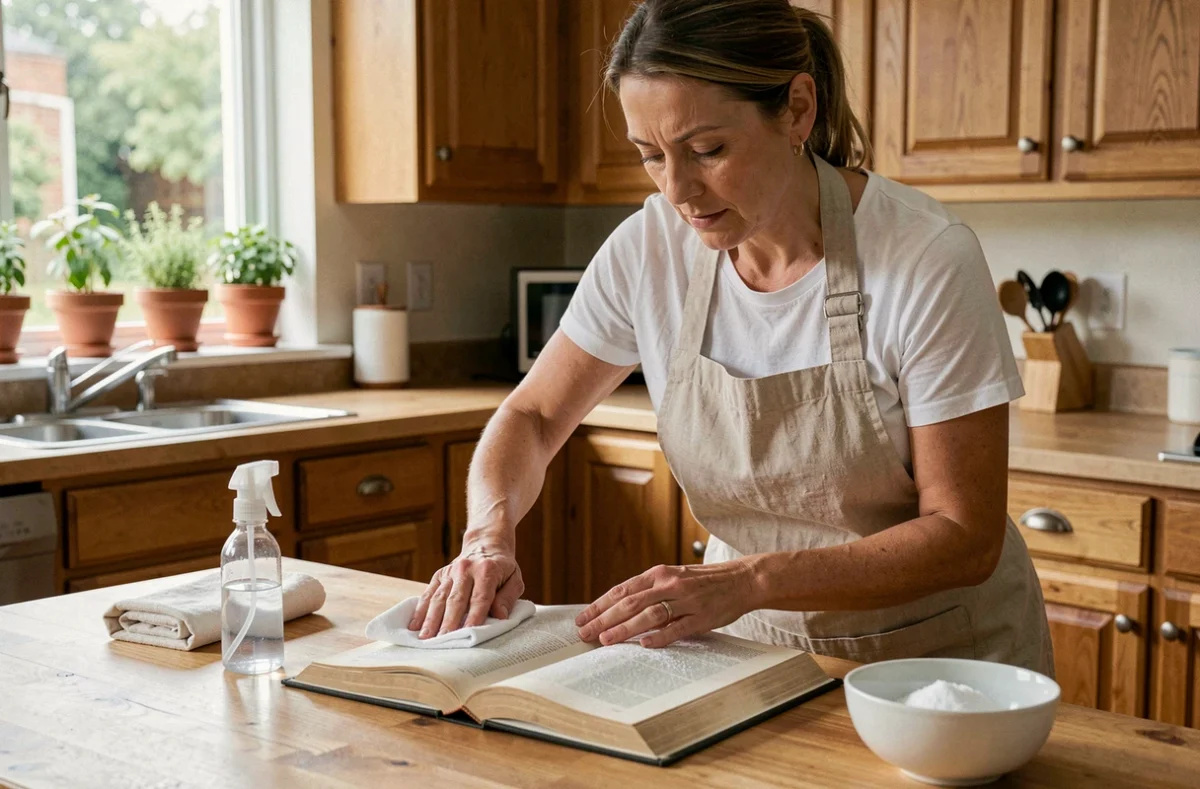
This table highlights a point often overlooked: the only safe treatment for paper is a method without liquid contact. Any direct application of a wet product on the pages exposes the book to structural damage.
Detailed techniques for handling this type of situation are described on the site Les Animaux de la Fée, with precautions suitable for paper support.
Drying the book before deodorization: the step many skip
If the book is still damp at the time of discovery, attempting to deodorize it immediately is counterproductive. Moisture trapped between the pages creates an environment conducive to mold, which adds its own odor to the initial problem.
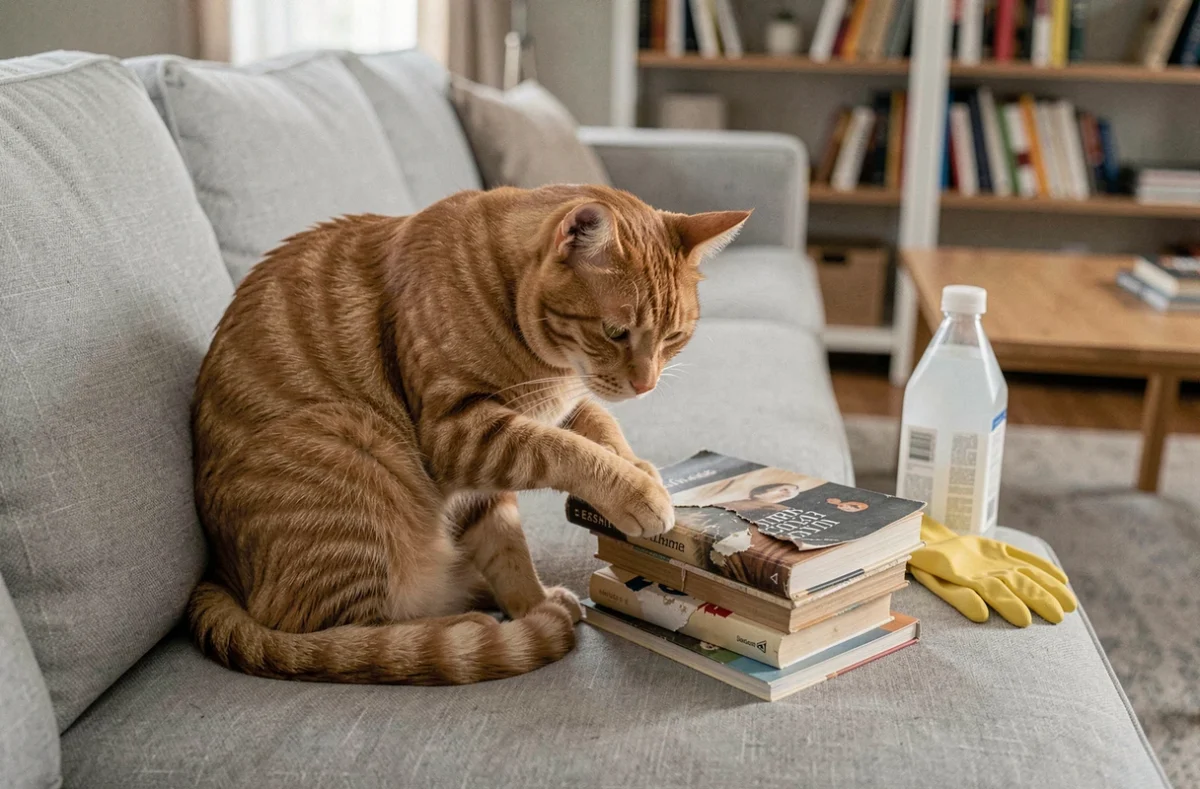
The procedure relies on patience:
- Gently separate the pages and insert clean absorbent paper between the affected sheets. Replace this paper as soon as it becomes damp.
- Leave the book fanned open in a ventilated room at room temperature. Avoid radiators, hair dryers, and direct sunlight, which can warp the binding and break the paper fibers.
- Only proceed to the deodorization step once the book is completely dry to the touch, including at the spine.
A book dried too quickly on a radiator warps irreversibly. Rushing is the most common mistake.
Contactless deodorization: baking soda and activated charcoal in a closed environment
Once the book is dry, the safest method is to enclose the book with an absorbent agent in an airtight container, ensuring the absorbent does not touch the pages.
Place the book in a large paper bag or a rigid plastic container with a lid. Next to it (not on top, not between the pages), place an open container with baking soda or activated charcoal. Close everything and let it sit for several days.
Baking soda absorbs odor molecules without adding moisture to the paper. Activated charcoal works on the same principle, often having a higher absorption capacity for sulfur compounds.
The result is not guaranteed on the first attempt. If the odor persists after a week, renew the absorbent and start again. Two or three cycles may be necessary for a heavily impregnated book.
Plastic or cardboard cover: a possible surface treatment
If only the cover is affected and it is plasticized or laminated, localized cleaning becomes feasible. A slightly damp cloth with a drop of white vinegar can be wiped over the surface, then immediately wiped dry with a clean cloth. Test first on a less visible corner to ensure the lamination does not peel off.
Never let liquid run towards the spine or pages. Cover cleaning only concerns the outer surface.
Old or valuable book: when to stop home attempts
For a valuable work (rare edition, signed book, antique binding), home methods quickly reach their limits. The risk of damaging a precious book through improper handling often outweighs the expected benefit.
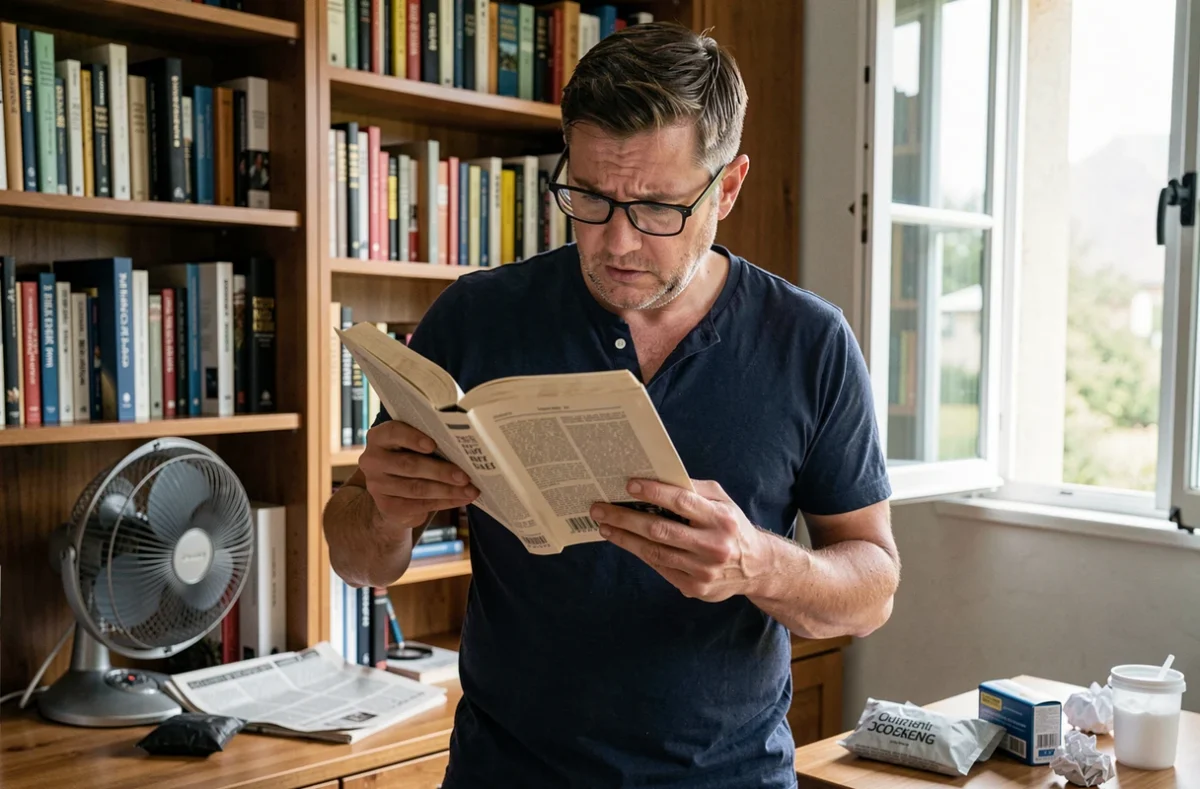
Conservation professionals have specialized techniques, such as freeze-drying, that allow for the treatment of severely affected works without destroying them. This type of intervention is not improvised: a heavily impregnated and valuable book justifies the advice of a restorer.
In practice, the majority of common books (paperbacks, manuals, comics) handle the baking soda method in a closed environment well. The odor gradually decreases, even if a slight olfactory trace may remain on a heavily impregnated work. A personal library book recovered in time, dried properly, and then deodorized without contact usually returns to an acceptable reading condition.
The determining factor remains the speed of intervention after the incident. The sooner drying begins, the less urine penetrates deeply into the paper fibers, and the more likely deodorization is to succeed.