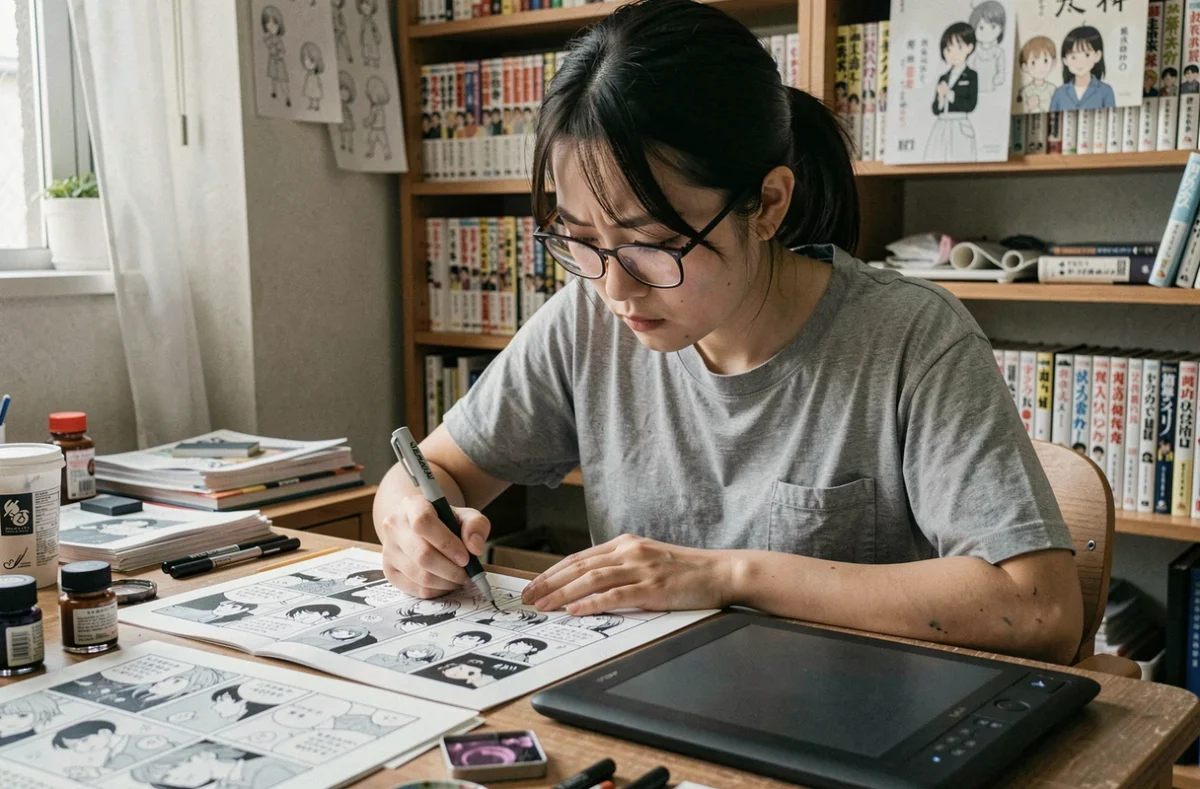
A beginner mangaka does not spend their days drawing. They spend them looking for a publisher, reformatting their pages for a digital platform, juggling a day job and their deadlines. Starting from this reality helps to understand what the profession concretely requires, far beyond graphic talent.
Artist-author status and income: what being a mangaka entails in France
In France, comic book and manga authors fall under the artist-author status. This status does not provide the same protections as an employee contract, particularly regarding unemployment benefits.
The combination of activities is structural in this profession. Many French mangakas supplement their income through commissioned illustration, running workshops, or teaching drawing. Considering manga creation as a sole source of income from the start exposes one to rapid financial difficulties.
Before diving in, it’s wise to anticipate this economic dimension: plan for a complementary activity compatible with a regular production pace, and budget for materials (graphics tablet, software, proof printing). To discover I Announce to become a mangaka, this question of the professional framework is one of the first topics addressed.
Digital publishing and webtoons: the game-changing path for a mangaka
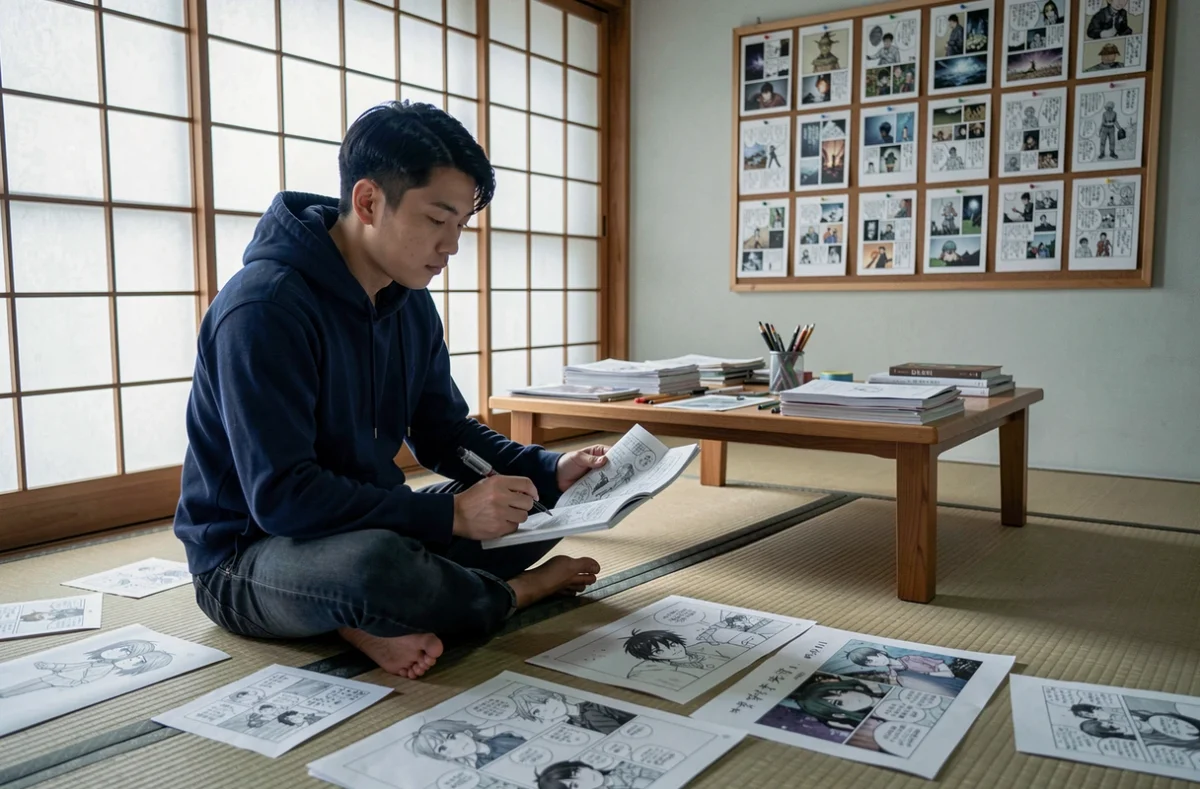
The classic path (script, storyboard, inking, sending to a publisher) remains valid, but it is no longer the only one. Digital publishing platforms have reshuffled the deck.
The webtoon format, in particular, allows for publishing without going through a publishing house. One posts their chapters, builds an audience, and gradually monetizes. In 2026, the premium offering of subscription-based digital manga continues to grow with the launch of platforms like Emaqi.
Building an online audience before approaching a publisher has become a common strategy. A mangaka who arrives with several thousand loyal readers has a concrete argument during a publishing negotiation.
Opinions vary on this point: some authors believe that free digital publishing devalues the work, while others see it as a necessary springboard. What is certain is that mastering the vertical format (scrolling) in addition to the classic page format significantly broadens opportunities.
Editorial concentration and submission strategy in French manga
The French manga market is dominated by a few players: Glénat Manga, Kana, Pika, Kurokawa, Ki-oon, Crunchyroll Manga. This editorial concentration makes access to major houses difficult for an author without a network or prior publication.
In the face of this lockout, two avenues deserve to be explored in parallel:
- Target independent micro-publishers specializing in French-language manga, who are more likely to accept atypical projects and beginner authors
- Submit a solid editorial dossier including a detailed synopsis, a complete pilot chapter (about twenty inked pages), and a statement of intent specifying the target audience
- Develop an online portfolio with regular excerpts to demonstrate sustained production capacity, not just a one-off splash
A publisher is not only looking for a good artist. They are looking for an author capable of maintaining a production pace over several volumes. Consistency weighs as much as graphic quality in a publication decision.
Concrete technical skills to work on to become a mangaka
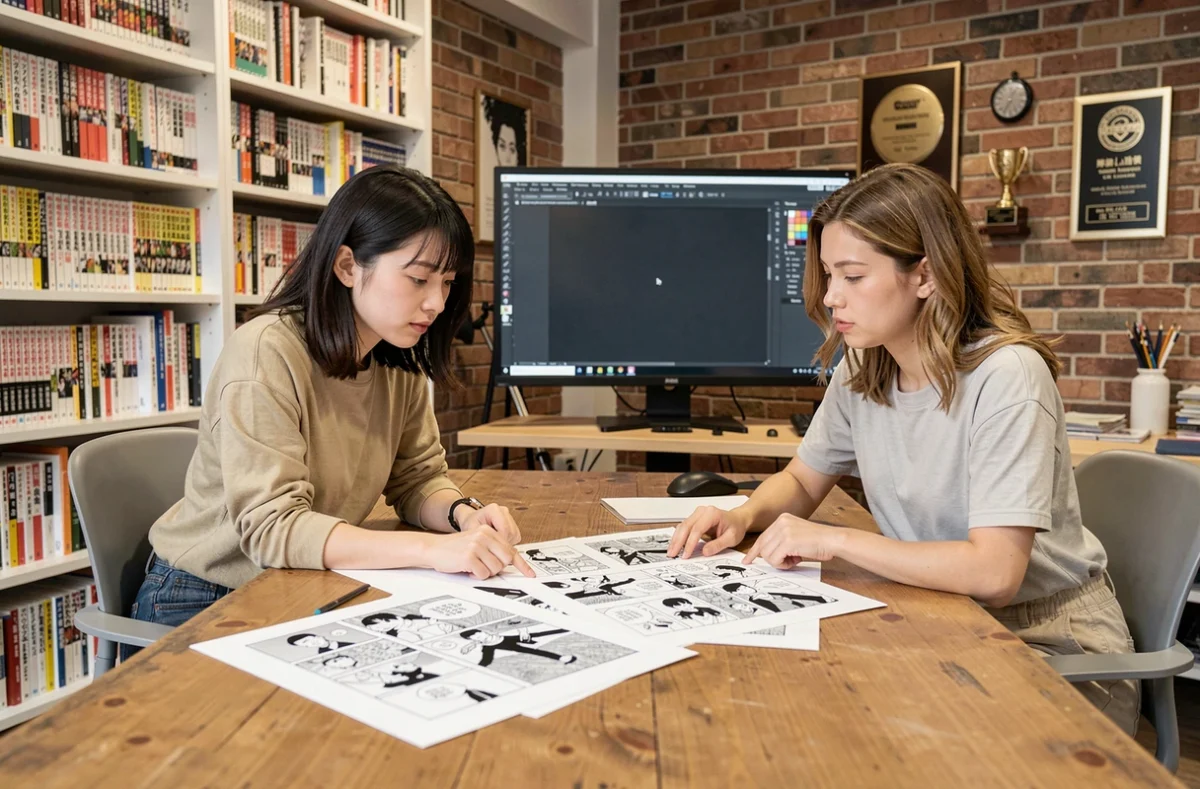
We often talk about “knowing how to draw,” but the mangaka profession requires specific skills that must be isolated for effective progress.
The narrative layout (the ability to tell an action in a sequence of panels) is the most underestimated skill. A mangaka may have an average drawing style and compensate with fluid layout that carries the reader along. The opposite rarely works.
Inking and managing blacks and whites form the technical foundation of traditional manga. Working on screentones, mastering contrasts, knowing how to set a mood without color: these skills are acquired through analytical copying of existing pages, not just through free invention.
- Practice quick sketches of characters in motion to gain dynamism in action pages
- Study page composition from recognized mangakas to understand how the reader’s gaze moves from one panel to another
- Practice writing short and impactful dialogues, as an overloaded speech bubble disrupts the reading rhythm typical of manga
For those transitioning to digital, mastering drawing software like Clip Studio Paint (standard in the industry) saves considerable time on inking and screentone application.
Doujinshi and self-publishing: testing your manga before submission
In Japan, doujinshi (self-published work) is a common step for aspiring mangakas. In France, this approach is still less widespread but is gaining ground.
Producing a first self-published issue allows you to test your concept with real readers. It can be sold at conventions (Japan Expo, Paris Manga), distributed online, and direct feedback can be collected. This feedback loop is far more formative than years of isolated work.
The doujinshi also serves as a business card for publishers. A physical object, even modest, demonstrates that one knows how to carry a project from start to finish: writing, drawing, layout, printing.
Becoming a professional mangaka requires less raw talent than method and perseverance. The status, publication strategy, production pace, and ability to handle rejections determine a career more than the quality of the first drawing placed on the table.