A child refusing to put on their shoes in the morning, a teenager retreating into silence after dinner, a parent feeling exhaustion build with no one to share the load: everyday family life is made up of small situations that seem harmless on their own but become overwhelming when they keep happening. Supporting children and adults through these dynamics takes fewer one-size-fits-all solutions and more practical guidance tailored to what each family is really going through.
Managing screen time as a family: setting boundaries without starting a war
Have you noticed that banning screens often has the opposite effect to the one you intended? The child negotiates, cries or waits until the adult has their back turned. The problem isn’t always how much time they spend on a screen, but the lack of shared rules.
An effective framework has three elements: a visible schedule (posted on the fridge, for example), content discussed together, and a replacement activity ready to go. Don’t just take the screen away—replace it with something else. When a child knows that a cartoon will be followed by a board game or an outing, the transition goes more smoothly.
With teenagers, the approach changes. Imposing strict screen-time limits on a high school student who uses their phone for homework and socialising creates more conflict than it resolves. Agreeing on screen-free periods (during meals and for the last half-hour before bed) works better than a rigid timer.
There are plenty of resources for exploring these topics further. Subjects such as digital technology use in the family, mealtimes, age-appropriate activities and parental wellbeing are covered, for example, in Je veux de l’info’s family section, which brings together practical articles for parents.

Supporting children’s emotions at every age
A three-year-old stamping their feet and a preteen slamming their door are expressing the same thing: an emotion they haven’t yet learned to regulate. The difference lies in how the adult can respond.
Under six: naming emotions to calm things down
Very young children don’t have the words to say how they feel. When a parent names the emotion (“you’re angry because your brother took your toy”), they give the child a tool they can use on their own later. Naming an emotion reduces its intensity, for adults as well as children.
In practice, this also means accepting a meltdown without trying to stop it straight away. Simply staying nearby, at the child’s eye level and without raising your voice, is often enough to shorten the episode.
Ages seven to twelve: look for the reason behind the behaviour
A child who consistently refuses to do their homework isn’t necessarily lazy. They may be struggling with a particular subject or dealing with a conflict at school that they can’t put into words. Asking open-ended questions (“what’s making this difficult for you?”) rather than giving orders (“do your homework”) can reveal the real reason.
Repeated behaviours are signals, not tantrums. When the same refusal happens several days in a row, it deserves a calm conversation away from the moment of tension.
Teenagers: respect their need for space
A teenager who shuts themselves away in their room isn’t rejecting their family. They’re developing their identity, and that involves spending time alone. A common mistake is to push for a conversation at the wrong time, which only makes them withdraw further.
Being available without pressing, making suggestions without insisting, and keeping up short rituals (a car ride, one phone-free meal a week) creates opportunities for conversation without pressure.
Preventing parental burnout: practical support that’s available
Advice on getting better organised day to day has its limits: it depends on the parent having enough energy. When that energy runs low, no tidying tip or meal plan is enough. Parental burnout is a recognised phenomenon, not a sign of weakness.
Several support services are available to provide a helping hand before things reach a crisis point:
- Home support services for families (SAAD Familles) arrange for professionals to visit the home and support parents with everyday tasks, including on a preventive basis. The French National Authority for Health is currently working on a national framework for these services.
- Family and social support workers (TISF) can be arranged through the CAF to support families going through a difficult period, such as a birth, illness or separation.
- Respite services, such as those described by the ARS Hauts-de-France, offer information, support and temporary relief for family caregivers, including those caring for a family member with a disability.
One point comes up repeatedly in feedback from families: lack of information about these services is often the first barrier, even before questions of access or cost. Simply knowing that this support exists can bring some relief.
Family meals: an underestimated way to strengthen everyday bonds
Sharing a meal is still one of the few times the whole family is physically together in one place. Yet it often becomes a source of stress: rushing to prepare food, a child refusing to try anything, screens making their way to the table.
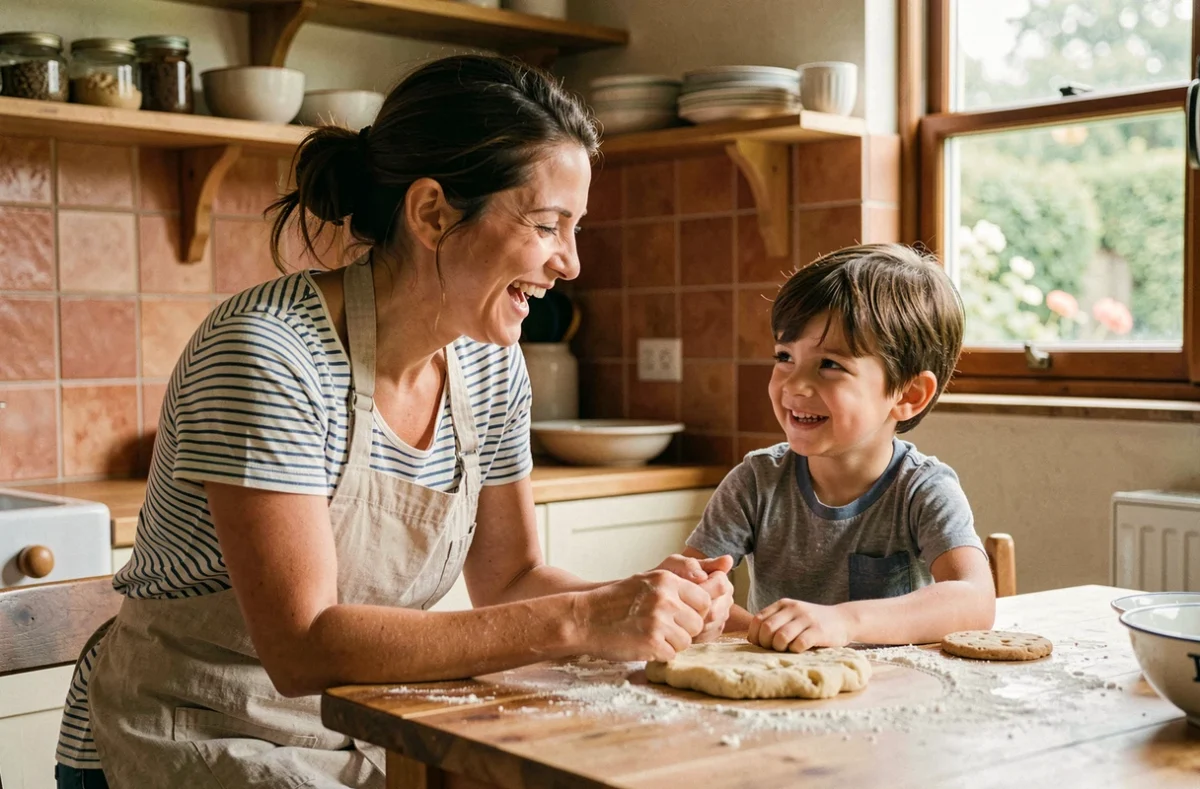
Getting children involved in preparing meals can change the dynamic. A four-year-old can wash vegetables. An eight-year-old can follow a simple recipe. Taking part in cooking can reduce food refusal because children feel connected to what they eat.
For weeknights, preparing two or three meals in advance on Sunday (or another quieter day) takes away the question “what are we having for dinner tonight?”, which on its own can create a disproportionate mental load. It’s not about perfect organisation; it’s about making one decision once to avoid making five later.
A family meal doesn’t have to be a formal occasion. Ten minutes sitting together without phones, with a simple question (“what was the best part of your day?”), is enough to keep regular conversation flowing between parents and children.
Supporting a family day to day means accepting that what works will change from week to week, depending on everyone’s age and energy levels. What matters isn’t following a perfect method, but identifying a few adjustments that make everyday life genuinely easier.