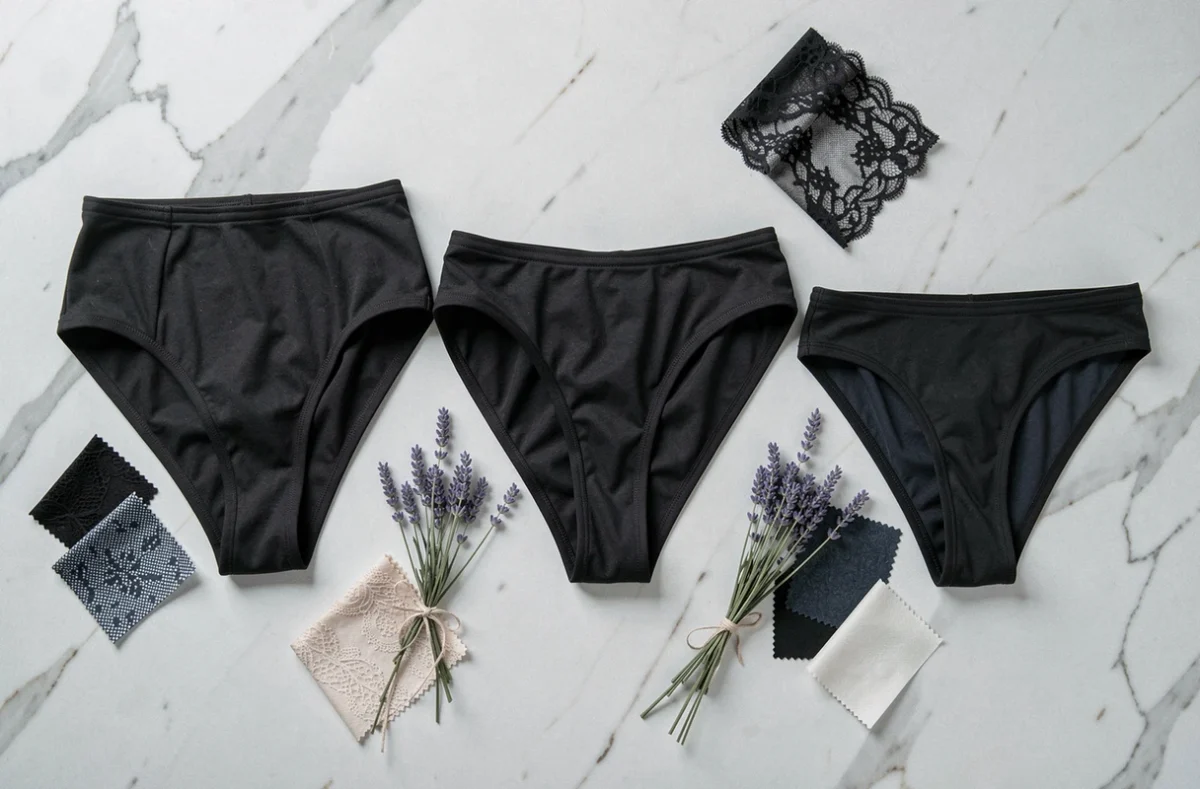
The women’s lingerie market offers dozens of black underwear styles, with differences in price, cut and fabric that make choosing less straightforward than it might seem. Between marketing claims (“second skin,” “invisible under clothing”) and genuine technical criteria, it takes more than a glance at the label to make the right choice. This article reviews the practical factors that determine the comfort and durability of black underwear worn every day.
Fabric composition and black dye: what REACH regulations mean
Black lingerie is dyed using processes that vary from one brand to another. One aspect rarely covered in buying guides is the chemical compliance of the finished product—not just the raw material.
From October 10, 2026, a REACH restriction targeting PFHxA and certain related substances will apply to the relevant clothing and accessories. For black underwear, this does not mean that black dye is directly affected. The practical step is to check whether the brand provides information about the chemical compliance of its products, beyond simply stating “cotton” or “microfiber.”
In practical terms, a brand that lists the full composition (main fabric, elastane, surface treatment) and states that its products comply with European standards offers a higher level of transparency. Choosing women’s black underwear with this information in mind helps you balance comfort and textile safety.
French regulations also address the durability and commercial practices of textile brands. Comparing manufacturers on product range, repairability and country of manufacture has become a selection criterion in its own right.

Black underwear styles and body shape: three cuts, three distinct uses
Competitors often list five to eight different cuts. In practice, three main styles cover most everyday needs.
Classic mid-rise underwear
The most versatile cut. It covers the hips without digging in, with an elastic waistband that sits below the navel. This style is best suited to those looking for support without restriction. It works under jeans, a straight skirt or tailored trousers without showing through.
High-waisted underwear
The waistband sits above the navel. This style suits those who want a light smoothing effect around the stomach. The extra coverage can also feel reassuring after pregnancy or abdominal surgery. The trade-off is that high-waisted underwear can feel warmer in summer.
High-cut or Brazilian underwear
The leg openings sit higher on the hips, providing less rear coverage. This style helps prevent visible lines under tight-fitting clothes. It may be less suitable for very active days, as the fabric can shift with repeated movement.
The choice between these three cuts depends more on your daily activities and the clothes you wear than on body shape alone. Underwear worn for eight hours at a desk has different requirements from a pair worn for a day of walking.
Fabrics and finishes: what really makes underwear comfortable every day
The main fabric only tells part of the story. The finishing details (seams, elastic, gusset) determine how comfortable a pair feels over the course of a full day.
- Cotton remains the go-to choice for the gusset because it allows good airflow around the intimate area. Intimate health recommendations advise choosing cotton underwear and avoiding styles that are too tight.
- Elastane provides stretch and helps underwear keep its shape, but its percentage in the fabric affects how long it lasts. Too much elastane can cause the garment to lose its shape more quickly after repeated washing.
- Flat seams or bonded edges reduce friction. A waistband that digs in or seams that rub can affect perceived comfort just as much as the main fabric.
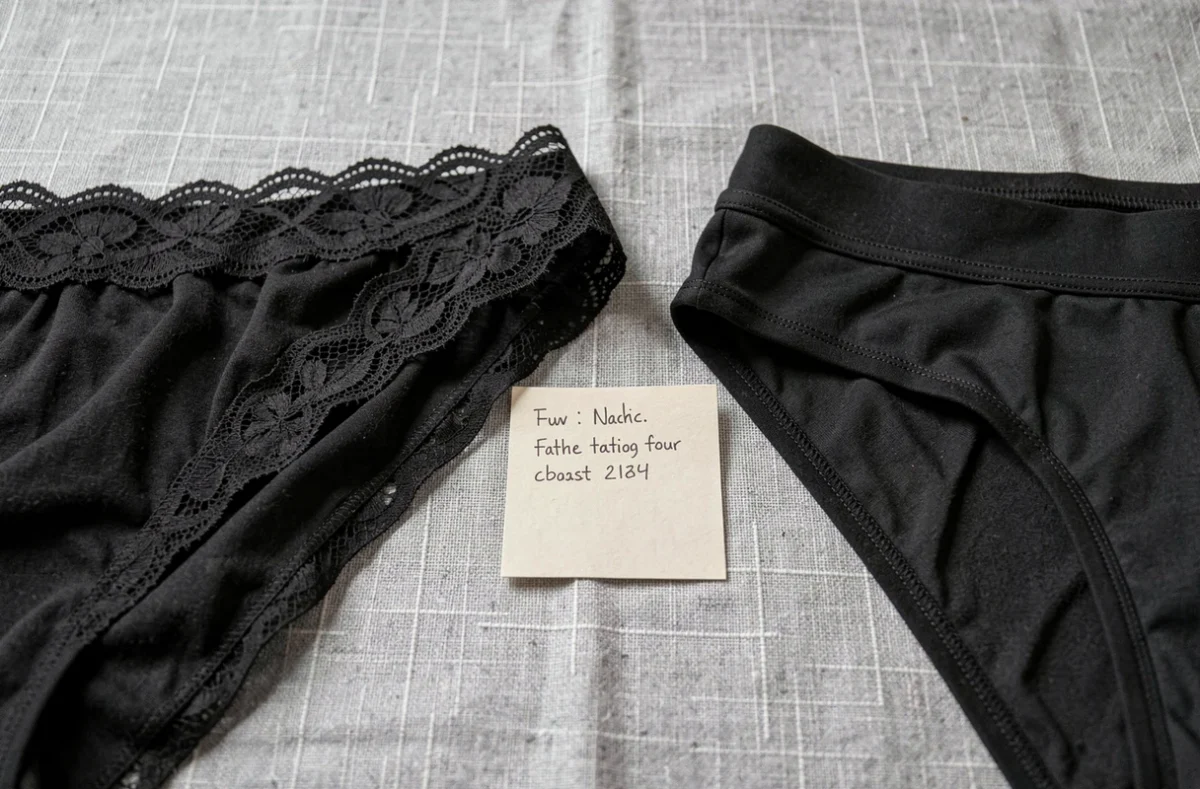
- Lace, often associated with elegance, varies widely in quality. Stiff lace can irritate the skin, while soft, stretchy lace feels barely noticeable under clothing.
For sensitive skin, the top priority is not the fabric used for the body of the underwear, but the fabric of the gusset and edges that come into direct contact with the skin. A microfiber style with a 100% cotton gusset and covered elastic may be more comfortable than an all-cotton pair with poor finishing.
Caring for black underwear: preserve the elastic and color
How well black underwear holds up to everyday wear depends directly on how it is washed. Heat accelerates the loss of stretch in elastic components, which explains why a pair that feels comfortable when new can become loose within a few weeks.
Following the care label is more than a cosmetic recommendation. Avoiding a hot tumble dryer when the manufacturer advises against it can significantly extend the life of the elastane. Washing at a low temperature also helps preserve the black dye, which tends to run more quickly than lighter colors.
A mesh laundry bag protects lace and delicate finishes, but it cannot make up for washing at too high a temperature. A cold or warm wash cycle without a high-speed spin is the best compromise between hygiene and longevity.
Key criteria for making an informed purchase
- Check the full composition, including the gusset and elastic, not just the main fabric highlighted on the label.
- Choose a cut that suits how you’ll wear it: sitting at a desk, staying active, or wearing fitted or loose clothing.
- Look for brands that provide information about chemical compliance and country of manufacture.
- Follow the care instructions to prevent premature loss of shape.
- Check the stretch of the waistband before buying: it should neither roll over nor leave red marks on your skin after a few hours.
Choosing elegant, comfortable black underwear for everyday wear comes down to balancing the right cut, quality finishing and careful washing. Because black underwear is worn more often than other colors, it goes through more wash cycles, making quality construction even more important than it is for a color worn only occasionally.